
Cancer Blog

Dr Nirasha Chiranjan: Re-irradiation of Head and Neck Cancers
 Squamous carcinomas of the head and neck are often multiple, recurrent and aggressive. Surgery, radiotherapy and concurrent chemo-radiation are established standards of care in management of head and neck cancers. Locoregional failure is a major source of morbidity and mortality. Incidence can be as high as 50 % of all patients. [1,2] Field cancerization from chronic alcohol and tobacco usage results in second primary tumours at different sites with trimodality treatment often required. Local recurrences, nodal recurrences and second primary tumours represent part of the heterogeneity of this treatment population. New primary cancers should respond better to treatment than recurrent tumours in a previously irradiated field due to the inherent aggressiveness and radioresistance of recurrent tumour cells.
Surgery, palliative chemotherapy and re-irradiation remain difficult salvage options due to patient medical co-morbidities; site and extent of tumours; secondary sequelae from previous treatments and patient preference. [3,4].
Re-irradiation can be delivered using external beam radiotherapy, brachytherapy or stereotactic radiosurgery. Severe adverse reactions in high dose irradiated areas have been well documented over the past decades. The use of modern radiotherapy techniques (intensity modulated radiation therapy (IMRT) and radiosurgery (SRS)) with its advanced precision technology has improved the outcome and quality of life of these patients.[5,6]
Brachytherapy is a term used to describe the short distance treatment of cancer with radiation from small, encapsulated radionuclide sources. This type of treatment is given by placing sources directly into or near the volume to be treated. The physical advantage of brachytherapy treatments compared with external beam radiotherapy is the improved localized delivery of dose to the target volume of interest. The disadvantage is that brachytherapy can only be used in cases in which the tumour is well localized and relatively small. Brachytherapy has achieved good local control in selected patients. Although brachytherapy has a potential to cure oral, oropharyngeal, nasopharyngeal, and lymph node recurrences [8], only superficial small tumours can be treated, and the number of experienced institutions is limited.
IMRT is an advanced form of three dimensional radiotherapy that not only conforms (high) dose to the target volume but also conforms (low) dose to sensitive structures. It is a radiation therapy technique in which non-uniform fluence is delivered to the patient through inverse planning. Benefits of IMRT are better normal tissue sparing resulting in reduced toxicity, higher doses to the target with a higher chance of cure and more dose within a fraction therefore fewer fractions. Studies have shown that IMRT is well tolerated and feasible in patients treated with previous radiotherapy for recurrent head and neck cancer. In some series it resulted in a better locoregional tumour control than conventional radiotherapy. [10]
Stereotactic radiosurgery and stereotactic radiotherapy allows highly conformal dose distribution and dose delivery to within a few mm for head and neck cancers. The practical advantage is a short duration of treatment usually lasting one day for radiosurgery and two weeks of alternative day treatment for stereotactic radiotherapy. Radiation doses are either single fractions of 13-18 Gy or 36-48 Gy in five to eight fractions. Treatment tends to be well tolerated with good efficacy. Due to the higher dose per fraction, side effects reported in the literature are brain necrosis, fistula formation and bleeding. [11-15]
The risks of re-irradiation include acute and chronic dysphagia, severe grade 3-4 mucositis, osteoradionecrosis, soft tissue necrosis, carotid rupture, fibrosis, long term tracheostomy and gastrostomy dependence and trismus. Treatment related mortality can be as high as 20% in some series. Favourable prognostic factors for overall survival, disease free survival and locoregional control are small T stage; no organ dysfunction; no patient co-morbidities; smaller tumour bulk after surgery; increased time since prior radiation; trimodality salvage and re-irradiation dose. Literature shows that improving locoregional control results in an improvement in overall survival. [7] The median re-irradiation doses vary between 60-66Gy in literature. In inoperable patients with small volume disease re-irradiation remains the only treatment option for cure.
In conclusion, there is a non-trivial cohort of patients with recurrence that can be salvaged. Trimodality therapy is associated with optimal outcomes. Re-irradiation is associated with substantial acute and late toxicities. Caregivers need to carefully balance risks and benefits of treatment and inaction. [7] Re-irradiation is a controversial topic which remains challenging especially for patients where other salvage treatment modalities are not an option. For the radiation oncologist it represents a fine balance between tumour related morbidity and treatment related toxicity.
Dr Nirasha Chiranjan
28 September 2017
References: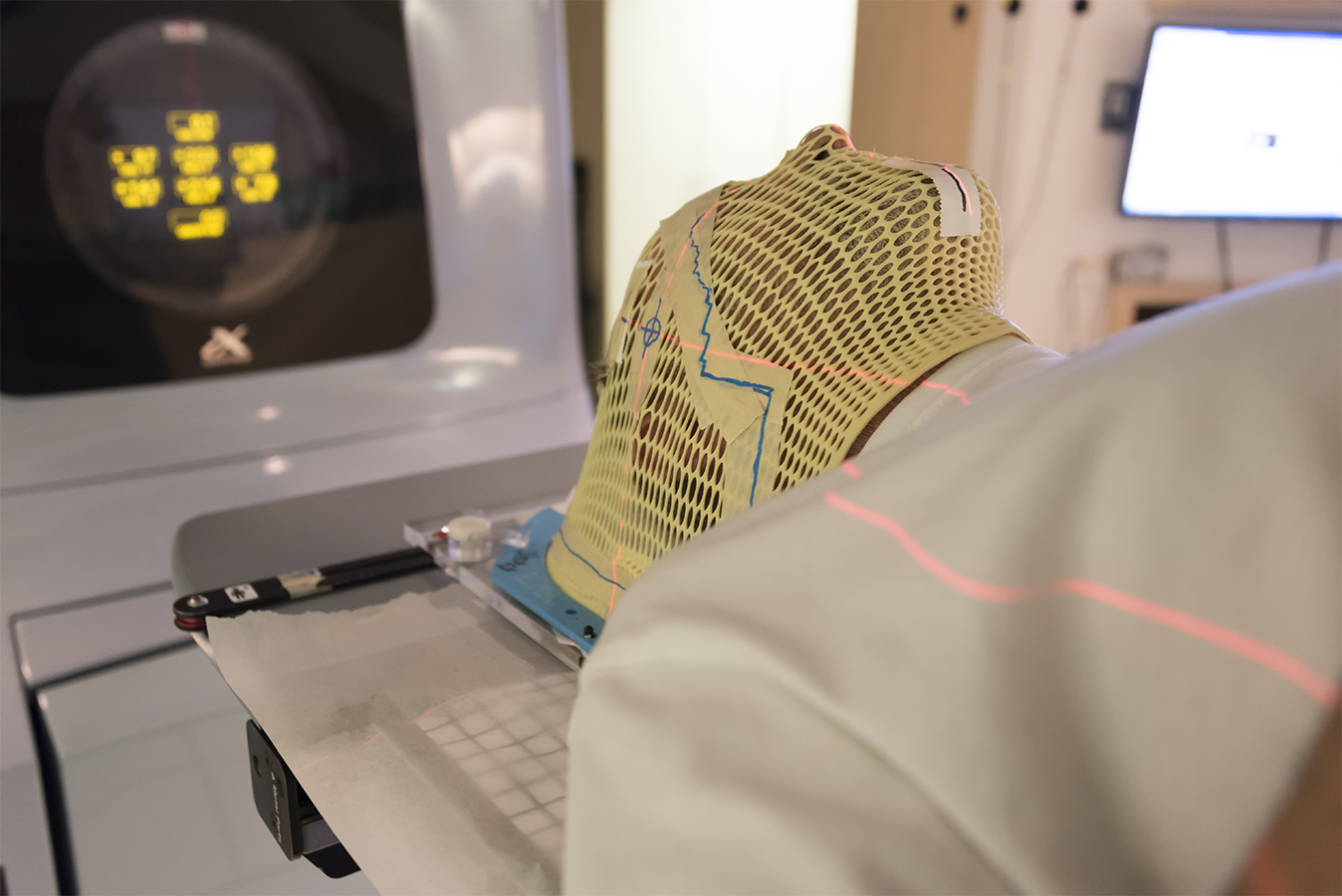
- Vokes EE, Weichselbaum RR, Lippman SM, Hong WK: Head and neck cancer. N Eng J Med 1993, 328:184-94.
- Dawson LA, Anzai Y, Marsh L, Martel MK, Paulino A, Ship JA, Eisbruch A: Patterns of local-regional recurrence following parotid-sparing conformal and segmental intensity-modulated radiotherapy for head and neck cancer. Int J Radiat Oncol Biol Phys 2000, 6:1117-26.
- Kao J, Garofalo MC, Milano MT, Chmura SJ, Citron JR, Haraf DJ: Reirradiation of recurrent and second primary head and neck malignancies: a comprehensive review. Cancer Treat Rev 2003, 29:21-30.
- Kasperts N, Slotman BJ, Leemans CR, de Bree R, Doornaert P, Langendijk JA: Results of postoperative reirradiation for recurrent or second primary head and neck carcinoma. Cancer 2006, 106:1536-47.
- Mendenhall WM, Mendenhall CM, Malyapa RS, Palta JR, Mendenhall NP: Reirradiation of head and neck carcinoma. Am J Clin Oncol 2008,31:393-8.
- Kodani N, Yamazaki H, Tsubokura T, Shiomi H, Kobayashi K, Nishimura T, Aibe N, Ikeno H, Nishimura T: Stereotactic Body Radiation Therapy for Head and Neck Tumor: Disease Control and Morbidity Outcomes. J Radiat Res (Tokyo) 2011, 52:24-31.
- David J Sher: Dana-Faber Cancer Institute: Head and neck reirradiation: perils and practice
- Hepel JT, Syed AM, Puthawala A, Sharma A, Frankel P: Salvage high-doserate (HDR) brachytherapy for recurrent head-and-neck cancer. Int J Radiat Oncol Biol Phys 2005, 62:1444-50.23. Popovtzer A, Gluck I, Chepeha DB, Teknos TN
- Aird, E.G., Williams, J.R., Rembroska, A., “Brachytherapy”, Radiotherapy Physics in Practice, Oxford Univ. Press, Oxford (2000)
- Lee N, Chan K, Bekelman JE, Zhung J, Mechalakos J, Narayana A, Wolden S, Venkatraman ES, Pfister D, Kraus D, Shah J, Zelefsky MJ: Salvage reirradiation for recurrent head and neck cancer. Int J Radiat Oncol Biol Phys 2007, 68:731-40.
- Siddiqui F, Patel M, Khan M, McLean S, Dragovic J, Jin JY, Movsas B, Ryu S: Stereotactic body radiation therapy for primary, recurrent, and metastatic tumors in the head-and-neck region. Int J Radiat Oncol Biol Phys 2009, 74:1047-53.
- Himei K, Katsui K, Yoshida A, Takemoto M, Kobayashi M, Kuroda M, Sato K, Baba Y, Hiraki Y: Initial experiences of CyberKnife tratment for Head and Neck cancer. Head Neck Cancer 2002, 28:186-191
- Roh KW, Jang JS, Kim MS, Sun DI, Kim BS, Jung SL, Kang JH, Yoo EJ, Yoon SC, Jang HS, Chung SM, Kim YS: Fractionated stereotactic radiotherapy as reirradiation for locally recurrent head and neck cancer. Int J Radiat Oncol Biol Phys 2009, 74:1348-1455.
- Ogita M: Iamge guided radiotherapy (IGRT): Advancement and New technology of CyberKnife. Initial Experience. INNERVISION 2009, 24:63-65
- Heron DE, Ferris RL, Karamouzis M, Andrade RS, Deeb EL, Burton S, Gooding WE, Branstetter BF, Mountz JM, Johnson JT, Argiris A, Grandis JR, Lai SY: Stereotactic body radiotherapy for recurrent squamous cell carcinoma of the head and neck: results of a phase I dose-escalation trial. Int J Radiat Oncol Biol Phys 2009, 75:1493-1500.